Sony Alpha 1 II vs. Canon EOS R5 Mark III
Two flagship 50MP-class hybrid mirrorless bodies that bracket the high-end pro market. Sony leans on a stacked-sensor speed advantage and the broadest third-party lens ecosystem. Canon counters with a tighter Cinema EOS video pipeline and ergonomics that hybrid shooters routinely prefer. Here's where each one wins — and which professional you should be to buy one over the other.
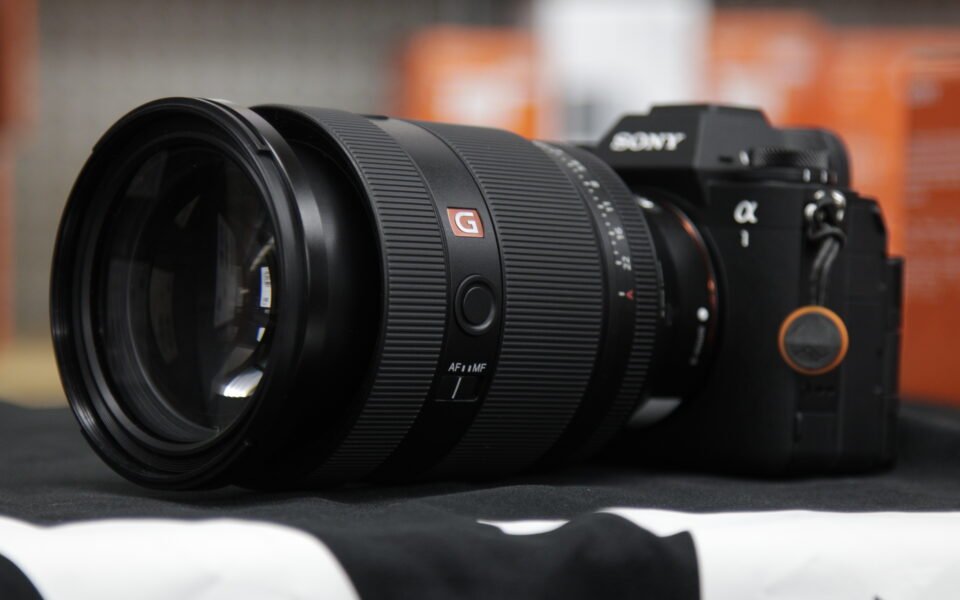
Sony Alpha 1 II
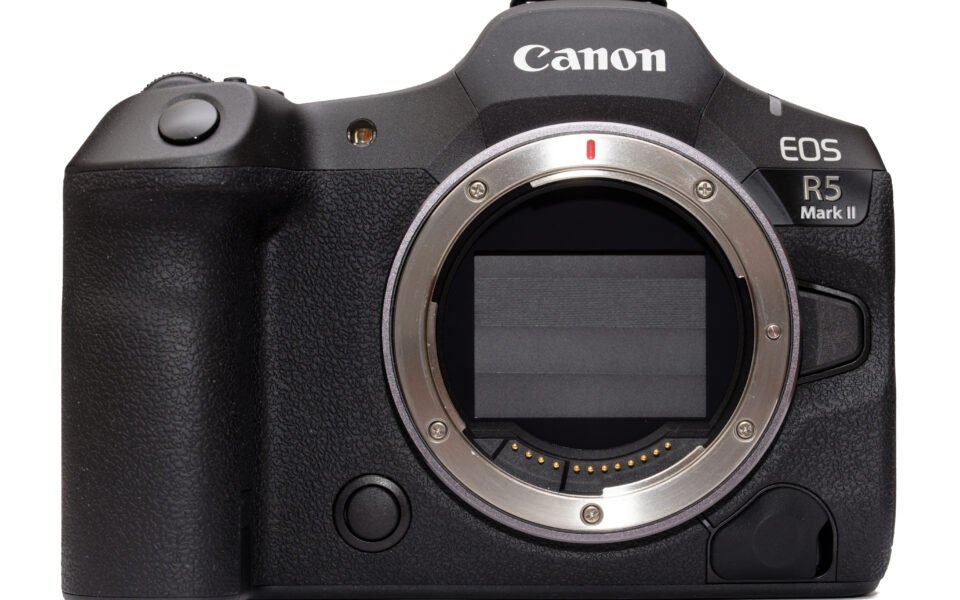
Canon EOS R5 Mark III
Score-by-score
Spec-by-spec
Pick by use case
Sony's 30fps blackout-free EVF + AI Recognition AF locks onto birds-in-flight and busy stadium action faster than Canon's Dual Pixel AF II. Pre-capture buffering means you can recover frames from before you fully pressed the shutter.
Canon's color science out of camera lands closer to skin-tone targets retouchers actually use, and RF L-series glass (RF 85mm f/1.2, RF 50mm f/1.2) is the industry reference for shallow-depth portrait work.
Canon's internal 8K 60p RAW + Canon Log 2 plus the Cinema EOS upgrade path (R5 → C70 → C400) makes it the cleaner system for video-first shooters. Sony catches up if you already own e-mount cine glass.
Where each wins
Burst rate & autofocus — Sony's stacked sensor still leads
The Alpha 1 II runs 30fps blackout-free continuous shooting at 50MP with full AF/AE tracking, fed by a BIONZ XR + AI Processing Unit pipeline that runs subject recognition continuously across humans, animals (bird, cat/dog, wildlife), vehicles (car, train, airplane), and insects. In practice this means birds-in-flight tracking that locks faster than Canon's Dual Pixel AF II in busy backgrounds, and pre-capture buffering so you recover frames from before you fully pressed the shutter. Canon counters with refined Dual Pixel AF II and Eye Control AF — extremely accurate, especially for human subjects with consistent eye behavior — but it concedes the absolute burst-rate ceiling and edge-of-frame AF coverage to Sony.
Image quality — a wash, with character differences
Both sensors land in the 45–50MP range with stacked readout that effectively eliminates rolling shutter for stills. Sony tends toward cooler, more neutral color rendering that commercial and product photographers favor for heavy color-grading workflows. Canon's color science skews warmer with stronger reds and forgiving skin tones, which is why wedding and portrait pros routinely stay in the system even when spec sheets favor Sony. Dynamic range is within 1/3 stop between the two — call it a tie. Sony's HEIF workflow is more mature for delivery; Canon's CR3 RAW has wider third-party support across Capture One, Lightroom, and DxO PhotoLab.
Video — Canon's pipeline, Sony's flexibility
The R5 Mark III continues Canon's investment in internal 8K RAW with Canon Log 2 and significantly better heat management than the original R5. If you're a video-first shooter feeding a DaVinci Resolve workflow that already color-matches against RED or other Cinema EOS bodies, Canon is turnkey. Sony shoots 8K 30p and 4K 120p (with an S35 crop), supports S-Cinetone for fast turnaround color, and integrates with FX-line cinema cameras via a shared menu and codec set. The bigger differentiator isn't the bodies — it's whether you want Canon's RF Cinema lens roadmap or Sony's larger third-party glass library.
Lenses, handling, and pro workflow
Sony's e-mount has a ten-year head start in third-party AF support — Sigma Art, Tamron G2, Samyang AF, and Viltrox all ship native AF lenses, which lowers total system cost meaningfully. Canon's RF mount is restricted to first-party (with a few licensed manufacturers), so glass is premium but the L-series is genuinely best-in-class for portrait and sports telephoto. Handling: Canon's grip and dial layout is friendlier to event shooters switching between stills and video; Sony's menu, while reorganized, still has more depth that Canon switchers find dense. Both bodies are pro-grade weather sealed and rated for hours of continuous operation.
Pros & cons
- + Best-in-class blackout-free 30fps EVF experience
- + AI Recognition AF with the widest subject-mode list (insects included)
- + Far larger third-party AF lens market (Sigma, Tamron, Samyang, Viltrox)
- + Longer battery life (~520 shots EVF) for full-day shoots
- + 240Hz EVF refresh — smoothest panning in the class
- − CFexpress Type A is faster per slot but costlier per GB than Type B
- − Menu density is steeper for Canon switchers
- − 4K 120p uses a Super-35 crop (no full-width 4K 120)
- − Higher launch price than the Canon body
- + Internal 8K 60p RAW with Canon Log 2 / Cinema EOS workflow
- + Color science out of camera that wedding & portrait retouchers prefer
- + Friendlier ergonomics, dial layout, and menu for hybrid shooters
- + Lower body price gives more budget for L-series glass
- + Eye Control AF for human subjects (no other brand offers this)
- − RF mount restricts third-party AF lenses — premium glass only
- − Shorter EVF battery life (~340 shots) needs spare LP-E6Ps
- − EVF refresh tops out at 120Hz vs Sony's 240Hz
- − Cinema EOS workflow has a steeper learning curve for stills-first shooters
Bottom line — who should buy which
Sony Alpha 1 II
Sports, wildlife, fast event, and action-first shooters who care about absolute burst rate, the widest AI subject recognition, and the largest third-party glass market. Travel and editorial photographers who carry their kit all day will also appreciate the better battery life. If you already own e-mount glass, the choice is obvious.
Canon EOS R5 Mark III
Weddings, portraits, and hybrid stills-plus-video work for clients who expect Canon color out of camera. Studio shooters with existing EF glass (and an EF-to-RF adapter) get the smoothest transition. If your work feeds a video pipeline that benefits from Cinema EOS color matching across multiple bodies, Canon is the cleaner long-term system — and the cheaper entry point at the body level.
Common questions
Is the burst-rate difference noticeable in real-world shooting? +
For most photojournalists and event shooters, both cameras are fast enough. The gap matters for wildlife and sports specialists where 30fps blackout-free EVF and full-frame AF coverage meaningfully change hit rate on tight action sequences — particularly birds-in-flight or fast-moving athletes against busy backgrounds.
Which has better autofocus in low light? +
Sony rates AF down to -4 EV, Canon to -6.5 EV with f/1.2 lenses. In practice Canon's Dual Pixel AF II is slightly more reliable in near-dark conditions for static or slow subjects, while Sony's AI subject recognition compensates with stronger predictive tracking when subjects are moving.
Can I switch systems without rebuying every lens? +
Mostly no. Sony e-mount and Canon RF are different mounts with no factory cross-adapters that preserve full AF performance. EF-to-RF adapters work flawlessly for Canon EF users moving to RF, but cross-brand migration means rebuying glass. Rental can soften the cost of trying the other system before committing.
Which body holds value better in the used market? +
Historically Canon flagship bodies hold roughly 5–10% better residuals after 2 years versus Sony equivalents — Canon users tend to stay in-system longer because RF lens investment is steeper. That gap has narrowed each generation as e-mount third-party glass keeps Sony bodies attractive on the used market.
Should I wait for the next Sony or Canon flagship instead? +
Both lines run on a 2–3 year flagship cadence. Sony's next Alpha 1 refresh is expected in 2026–2027; Canon's R5 line typically updates on a similar window. If you have paying work this year, buy now — flagship gains are incremental at this tier, and depreciation hits sooner than missing-out-on-features regret.
Sony wins the speed war by a hair. Canon wins the video and ergonomics war by more.
Both bodies are within margin-of-error for image quality and autofocus reliability. The honest answer comes down to lens lineup, color preference, and which pipeline — Sony's e-mount third-party glut or Canon's Cinema EOS coherence — you'd rather invest in for the next decade.