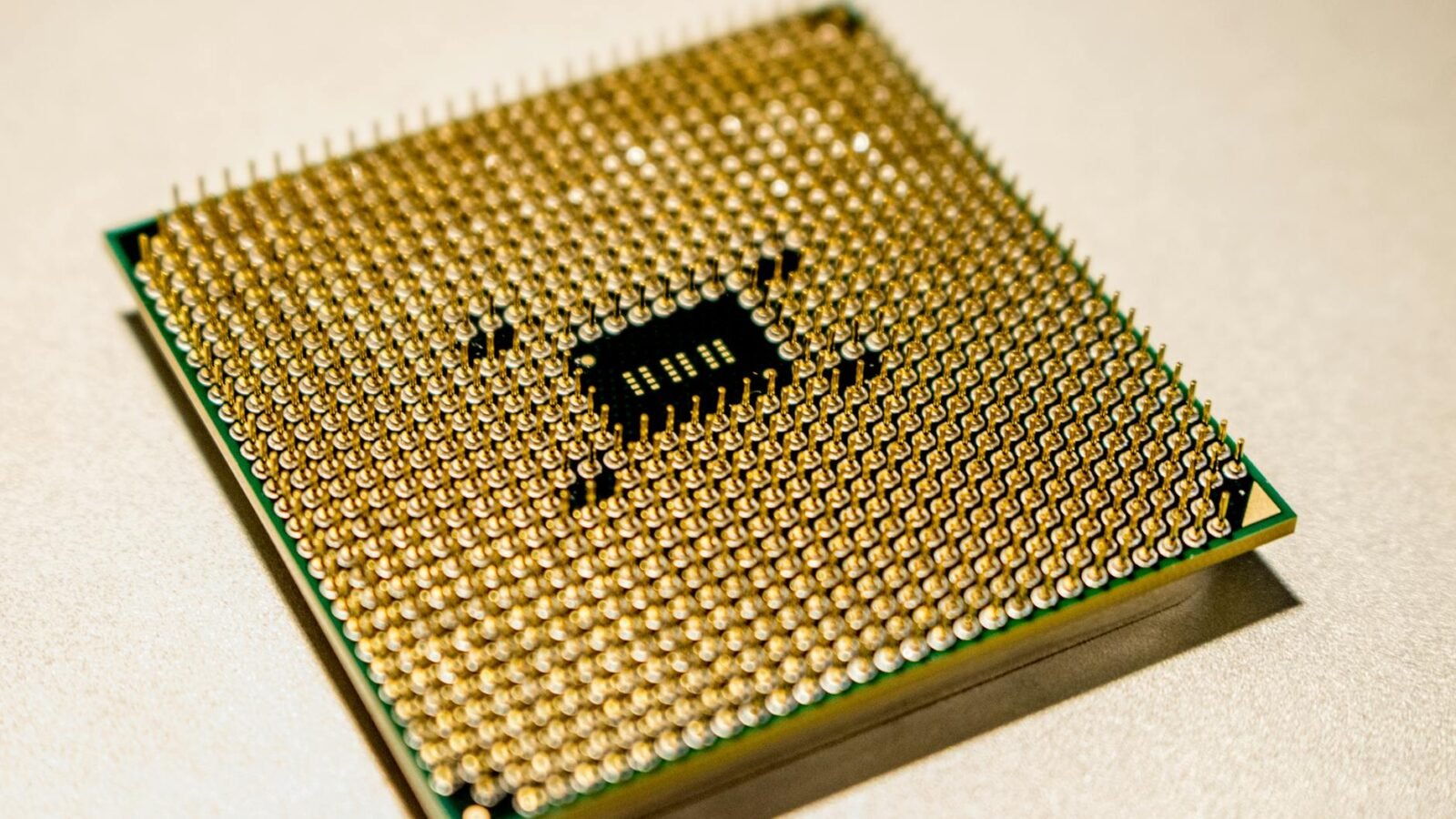
Apple's recent launch of the M5 Pro chip marks a substantial upgrade in the laptop segment, particularly for the MacBook Pro. Introduced alongside the refreshed 14-inch and 16-inch MacBook Pro models in March 2026, this high-end system-on-a-chip (SoC) uses Apple's latest "Fusion Architecture" built on an advanced 3-nanometer manufacturing process. This architectural evolution enhances processing power and optimizes energy efficiency, which is essential for professionals using demanding applications.
Architecture and Performance Enhancements
The M5 Pro features a redefined core configuration with a total of 18 cores: 6 high-performance "Super Cores" and 12 power-efficient "Performance Cores." The Super Cores operate at speeds up to 4.6 GHz, delivering exceptional single-threaded performance, while the Performance Cores reach up to 4.4 GHz, designed for efficient multithreading. Apple claims this new setup offers a remarkable 30% increase in multithreaded performance over the M4 Pro, which is a significant consideration for users engaged in resource-intensive tasks like video editing and complex computations.
Compared to other SoCs, the M5 Pro is expected to outperform the older 16-core M4 Max, reaffirming its position at the top of mobile SoC performance. Notably, its single-core performance matches that of the acclaimed M5, which previously led benchmarks, including Geekbench 6.5.
Graphics and AI Capabilities
On the graphics front, the M5 Pro includes a next-generation 20-core GPU, featuring enhancements such as an improved shader core and second-generation dynamic caching. This upgrade results in a 20% increase in raw graphics performance compared to the M4 Pro, making it suitable for creative professionals who require high-fidelity graphics rendering.
AI capabilities have also significantly improved, with the M5 Pro featuring a 16-core Neural Engine and dedicated Neural Accelerators integrated into each GPU core. This architecture allows for over four times the peak GPU compute performance for AI applications compared to its predecessor, opening new possibilities in machine learning and data processing.
Memory and Connectivity
The M5 Pro chip supports up to 64 GB of unified memory, backed by a maximum bandwidth of 307 GB/s, ensuring high-performance tasks can be handled with ease. It includes Apple’s latest Media Engine, which facilitates hardware-accelerated decoding for formats like H.264, HEVC, and AV1, alongside ProRes encode/decode capabilities. The addition of native, on-chip controllers for Thunderbolt 5 enhances connectivity options, catering to professionals who need high data transfer speeds.
Pricing and Availability
The 2026 MacBook Pro lineup featuring the M5 Pro chip starts at approximately $2,303.28 for the model equipped with 24GB of unified memory and a 1TB SSD. Higher configurations, including those with 48GB of memory, are available, with prices reaching as high as $3,349.00 for models equipped with the M5 Max chip. The MacBook Pro models are now available and are expected to attract professionals and enthusiasts looking for powerful performance in a portable format.
The M5 Pro chip represents a significant advancement in Apple's silicon strategy, reflecting the company's commitment to pushing the boundaries of performance in laptop computing. With its strong focus on AI, graphics, and overall processing power, the M5 Pro is well-positioned to meet the evolving demands of users in creative fields and beyond.
Quick answers
How does the M5 Pro compare to the M4 Pro?
The M5 Pro offers a 30% increase in multithreaded performance and improved graphics capabilities.
When will the new MacBook Pro models be available?
The 2026 MacBook Pro models featuring the M5 Pro chip are currently available.
Is it worth upgrading from the M4 Pro?
For users requiring enhanced performance in demanding applications, the M5 Pro's advancements make it a compelling upgrade.

About the author
MJI Desk
MJI Desk covers consumer tech for MJI News.